
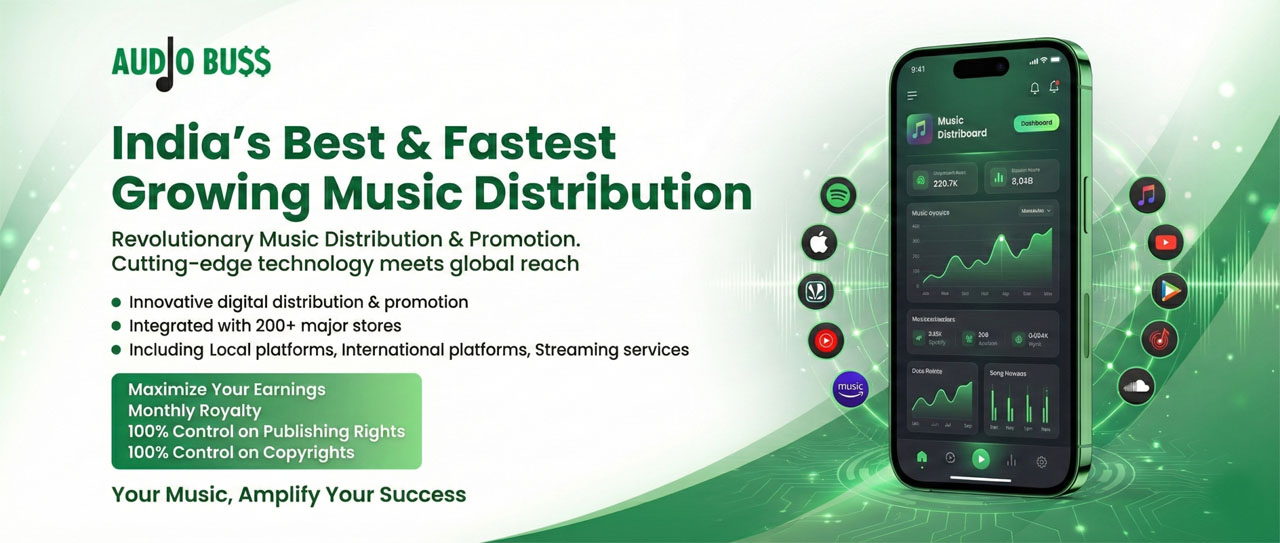
India's Best & Fastest Growing Music Distribution
Revolutionary Music Distribution & Promotion where cutting-edge technology meets global reach.
200+ Major Stores
Integrated with global giants like Spotify, Apple Music, and Amazon Music.
Local & Global Reach
Dedicated delivery to Indian platforms like JioSaavn, Wynk, and international stores.
Streaming Services
Instant availability on all major streaming and social media platforms (Insta/FB/TikTok).
Maximize Your Earnings
- Monthly Royalty
- 100% Control on Publishing
- 100% Control on Copyrights
Empower Your Music Career with
Professional Music Label Services
Start distributing your music today
Unlimited releases from just ₹399/month
Major Stores And Streaming Services


Caller Tune Distribution
for All Cellular Networks in India
Get your songs set as official ringtones and caller tunes across India's leading telecom providers.
Reliance Jio
Official JioTune distribution. Single 45-second cut allowed per song.
Airtel Hello Tunes
Seamless delivery to Airtel Wynk Music for Hello Tune activation.
VI (Vodafone Idea)
Full support for VI caller tunes across all Indian circles.
BSNL Tunes
Available for all BSNL subscribers (East, West, North, South).
Fast Delivery
Minimum: 3–5 Business Days
Maximum: 5–8 Business Days
Custom Solutions
Accepting previously released songs. Full C&P line branding included.


Why Choose Audiobuss
Maximize your music’s potential with India's fastest growing global distribution network.
Global Distribution
Unlimited Possibilities. Reach Spotify, Apple Music, YouTube Music, JioSaavn & 200+ platforms worldwide.
Data-Driven Insights
Detailed sales data & analytics. Track your performance in real-time with actionable insights to grow your fans.
Regional Language Support
Distribute songs in Hindi, Punjabi, Bhojpuri, Haryanvi, Marathi, Tamil and all Indian regional languages.
Fastest Approval
Quick Approval & Delivery
- 3–5 Business Days (Min)
- 8–10 Business Days (Max)
Custom CRBT
Caller tunes for Airtel, VI, BSNL, and Jio (45s Jiotune) to make your fans' experience unique.
Timeline: 3–8 Days
Free ISRC & UPC
Unlimited codes for every release at no extra cost. Ensuring global recognition & royalty tracking.
Royalty Reports
Transparent monthly reports. No hidden fees. Every rupee earned is clearly disclosed in your dashboard.
Custom Record Label
- Custom C&P Line
- Custom Label Name
- Unlimited Artists Support
One-Time Payment
Pay Once, Forever Yours. Lifetime presence on all stores with 100% ownership of your music.
Eligibility to Release Music
Audio Buss is a technology-enabled digital music distribution platform enabling creators and organizations to release content in accordance with global guidelines.
Independent artists and vocalists who are the lawful rights holders of their music may distribute their content through Audio Buss. No record label affiliation is required.
Artists producing rap, hip-hop, indie, and other genres may release music on all supported platforms, provided the content is original and legally authorized.
Producers and composers may release original works, instrumentals, and scores, provided they hold lawful control over composition and master rights.
Legally registered record labels may manage and distribute their artists’ releases through our system, subject to verification and platform compliance.
Studios and production houses may distribute music assets including soundtracks and catalogs, provided all third-party rights have been properly cleared.
Users managing large artist portfolios or multiple labels may operate through a centralized system, subject to internal verification standards.
Important Legal Notice
Audio Buss provides distribution and technology services only. Users confirm and warrant that they are the lawful rights holders of the content. All releases are subject to platform content policies, applicable copyright laws, and regional regulations. Any infringement remains the sole responsibility of the user.
Music Distribution FAQ
Premium Help Center
Explore detailed answers about music distribution, Spotify releases, royalties, copyright, publishing rights, licensing, caller tunes, streaming platforms and global music publishing.
English Answer
Music distribution is the process of delivering songs, albums and audio content to digital streaming platforms so people can listen to music worldwide. Through a professional music distribution system, artists, singers, producers, independent creators and record labels can publish music across platforms like Spotify, Apple Music, YouTube Music, Amazon Music, JioSaavn, Wynk Music, Instagram Music Library and many other streaming services.
Before music goes live, important details such as artist information, song title, metadata, release date, ownership details, artwork, copyright information and audio quality may be reviewed to support better release management and smoother platform approvals.
Music distribution helps creators expand their global audience, professionally release songs and manage music publishing more efficiently. If an artist already owns legal rights or valid permissions, the release process may become easier and smoother.
English Answer
Yes. Independent artists can release music globally without signing to a traditional record label if they legally own the music or have valid permission to distribute it. Today, singers, rappers, music producers, composers, devotional creators and independent musicians often release songs directly through digital music distribution systems instead of depending entirely on record companies.
A professional music distribution service can help artists deliver songs across Spotify, Apple Music, YouTube Music, Amazon Music, JioSaavn, Wynk Music, Instagram Music Library and other global streaming services. Before release, important information such as artist details, song metadata, artwork, ownership details, copyright information, release date and audio quality may be reviewed to support smoother approvals and better publishing management.
Independent artists who already own legal music rights, publishing permission or valid licenses may experience a faster and easier release process. Artists may also monitor audience growth, streaming analytics, royalty reporting and music performance after distribution to better understand how songs perform across platforms.
For many creators, releasing music independently provides greater creative freedom, better ownership control and more flexibility compared to traditional record label models. This approach may help artists build their own music brand while keeping stronger control over music publishing and distribution decisions.
English Answer
Releasing a song on Spotify generally starts with preparing your music for digital distribution. Artists usually organize important details such as song title, artist information, release date, audio quality, artwork, ownership information and metadata before submitting music for distribution. A professional music distribution process helps deliver songs to Spotify and other major streaming platforms in a structured and compliant way.
Through music distribution, songs may become available across Spotify, Apple Music, YouTube Music, Amazon Music, JioSaavn, Wynk Music, Instagram Music Library and other supported streaming services. During the release process, metadata accuracy, artwork quality, copyright ownership, publishing information and audio formatting may be reviewed to support smoother publishing and better platform compatibility.
Artists who already own legal music rights, publishing permission or valid licenses may experience a faster and easier release process. Independent artists, singers, rappers, music producers, devotional creators and labels can professionally distribute original songs and reach listeners globally without depending entirely on traditional release systems.
After a release becomes available, artists may monitor streaming performance, audience growth, analytics and royalty-related reporting to better understand listener engagement and music performance across platforms.
English Answer
Releasing a song online generally begins with preparing music files, artwork, metadata, artist details, ownership information and release preferences before distribution. A digital music distribution process helps artists make songs available across streaming services, digital music stores and supported online platforms where listeners can discover and stream music.
Songs may become available on Spotify, Apple Music, YouTube Music, Amazon Music, JioSaavn, Wynk Music, Instagram Music Library and other global music platforms depending on selected distribution settings and platform availability. During the process, important details such as song title, artist information, release date, audio quality, metadata, copyright ownership and artwork may be reviewed for smoother publishing and better platform compatibility.
Artists who legally own song rights, publishing permissions or valid music licenses may experience a more efficient release process. Independent artists, singers, rappers, producers, composers, devotional creators and record labels can professionally release original music online and build a stronger digital audience presence through streaming platforms.
Once songs are distributed, creators may monitor streaming performance, audience growth, royalty-related reporting and analytics to better understand how listeners interact with their music across platforms and regions.
English Answer
Uploading music to Apple Music generally happens through a digital music distribution process that helps artists, creators and labels publish songs across supported streaming services. Before release, artists usually prepare important information such as song title, artist details, release date, artwork, metadata, ownership information, copyright details and properly formatted audio files to support smoother distribution.
Through professional music distribution, songs may become available across Apple Music, Spotify, YouTube Music, Amazon Music, JioSaavn, Wynk Music, Instagram Music Library and many other streaming services. Platform approvals may depend on metadata quality, ownership verification, audio compliance, publishing information and release settings selected during submission.
Artists who legally own song rights, publishing permissions or valid music licenses may experience a faster and smoother release process. Independent artists, singers, rappers, producers, composers, devotional creators and music labels can professionally publish original songs and expand audience reach through global music streaming ecosystems.
After songs go live, artists may monitor audience growth, streaming analytics, music performance insights and royalty-related reporting to better understand engagement across supported digital platforms and listener regions.
English Answer
Releasing a song on YouTube Music generally begins through a professional digital music distribution process that helps artists publish songs across supported streaming services. Before release, creators usually prepare important information such as song title, artist details, ownership information, metadata, artwork, copyright information, release preferences and properly formatted audio files to support smoother publishing.
Through music distribution, songs may become available across YouTube Music, Spotify, Apple Music, Amazon Music, JioSaavn, Wynk Music, Instagram Music Library and other streaming platforms depending on distribution preferences and approval requirements. During the process, metadata accuracy, audio quality, ownership details and publishing information may be reviewed to improve compatibility and platform delivery.
Artists who legally own song rights, publishing permissions or valid licenses may experience a smoother and more efficient release process. Independent artists, singers, rappers, music producers, devotional creators, composers and labels can professionally distribute original songs to build global audience reach and streaming visibility.
After a song becomes available, creators may monitor streaming analytics, audience engagement, platform performance and royalty-related reporting to better understand listener activity and music performance across digital ecosystems.
English Answer
Releasing a song on Amazon Music generally happens through a professional music distribution process that helps artists, creators and music labels publish songs across digital streaming services. Before release, creators usually prepare important details such as song title, artist information, ownership details, metadata, copyright information, artwork, release settings and properly formatted audio files to support smoother distribution.
Through digital music distribution, songs may become available across Amazon Music, Spotify, Apple Music, YouTube Music, JioSaavn, Wynk Music, Instagram Music Library and other global streaming platforms depending on platform selection and distribution preferences. Metadata accuracy, publishing information, audio compliance and ownership verification may be reviewed during submission to improve platform compatibility and approval success.
Artists who legally own music rights, publishing permissions or valid distribution licenses may experience a smoother and faster release process. Independent artists, singers, rappers, music producers, composers, devotional creators and record labels can professionally distribute original songs and improve audience reach through digital streaming ecosystems.
After a release becomes available, creators may monitor streaming performance, listener engagement, analytics and royalty-related reporting to better understand how audiences interact with music across regions and supported platforms.
English Answer
Releasing a song on JioSaavn generally happens through a digital music distribution process that helps artists, creators and music labels deliver songs to streaming platforms. Before distribution, creators usually prepare important information such as song title, artist details, metadata, ownership information, copyright details, artwork, release preferences and properly formatted audio files to support smoother publishing.
Through professional music distribution, songs may become available across JioSaavn, Spotify, Apple Music, YouTube Music, Amazon Music, Wynk Music, Instagram Music Library and other streaming platforms depending on selected distribution settings and approval requirements. During submission, metadata quality, ownership verification, publishing information and audio formatting may be reviewed to improve compatibility and platform delivery.
Artists who legally own song rights, publishing permissions or valid licenses may experience a smoother and more efficient release process. Independent artists, singers, rappers, producers, devotional creators, composers and record labels can professionally distribute original songs and improve streaming visibility across multiple music ecosystems.
After songs become available, creators may monitor audience engagement, streaming performance, analytics and royalty-related reporting to better understand music performance across digital platforms and listener regions.
English Answer
Releasing a song on Wynk Music generally happens through a professional music distribution process that helps artists, creators and labels publish songs across supported digital streaming services. Before submitting music, creators usually prepare important information such as song title, artist details, metadata, copyright information, ownership details, artwork, release settings and properly formatted audio files to support smoother publishing and delivery.
Through digital music distribution, songs may become available across Wynk Music, Spotify, Apple Music, YouTube Music, Amazon Music, JioSaavn, Instagram Music Library and many other streaming services depending on selected platform settings and approval requirements. Metadata quality, publishing information, ownership verification and audio compliance may be reviewed during submission to improve release quality and platform compatibility.
Artists who legally own music rights, publishing permissions or valid licenses may experience a smoother and more efficient release process. Independent artists, singers, rappers, producers, composers, devotional creators and record labels can professionally distribute original songs and improve global audience visibility through streaming ecosystems.
After songs become available, creators may monitor streaming analytics, listener engagement, platform performance and royalty-related reporting to better understand audience interaction and music growth across digital platforms.
English Answer
Adding a song to the Instagram Music Library generally happens through a professional music distribution process that helps artists, creators and music labels deliver songs to supported streaming and social media music ecosystems. Before submission, creators usually prepare important information such as song title, artist name, ownership details, copyright information, metadata, artwork, release settings and properly formatted audio files to support smoother publishing.
Through digital music distribution, songs may become available across Instagram Music Library, Spotify, Apple Music, YouTube Music, Amazon Music, JioSaavn, Wynk Music and other supported music platforms depending on distribution preferences and approval requirements. During submission, metadata quality, publishing information, ownership verification, audio compliance and platform compatibility may be reviewed to support smoother availability across music services.
Artists who legally own song rights, publishing permissions or valid licenses may experience a smoother and more efficient release process. Independent artists, singers, rappers, music producers, devotional creators, composers and music labels can professionally distribute original songs and improve discoverability across reels, stories and music-based social content.
After songs become available in the Instagram Music Library, creators and audiences may use supported tracks in reels, short videos, stories and platform-integrated music experiences, helping artists improve visibility, audience engagement and music discovery across social ecosystems.
English Answer
Releasing music globally generally happens through a professional digital music distribution process that helps artists, creators and music labels publish songs across international streaming platforms and music ecosystems. Before release, creators usually prepare important information such as song title, artist details, ownership information, copyright details, metadata, release settings, artwork and properly formatted audio files to support smoother publishing.
Through professional music distribution, songs may become available across Spotify, Apple Music, YouTube Music, Amazon Music, JioSaavn, Wynk Music, Instagram Music Library and many other global streaming platforms depending on platform selection, regional availability and distribution preferences. During submission, metadata accuracy, ownership verification, publishing information and audio quality may be reviewed to improve platform compatibility and release success.
Artists who legally own music rights, publishing permissions or valid licenses may experience a smoother and more efficient release process. Independent artists, singers, rappers, producers, devotional creators, composers and music labels can professionally distribute original songs and improve audience reach across multiple countries, languages and listener regions.
After music becomes available globally, creators may monitor audience engagement, streaming analytics, royalty-related reporting and regional performance insights to better understand listener behavior, growth opportunities and music performance across international streaming ecosystems.
English Answer
The time required for music distribution generally depends on platform review processes, metadata accuracy, ownership verification, audio quality checks and release settings selected during submission. Some releases may move faster, while others may take additional time depending on approval requirements and platform-specific review systems.
During music distribution, important information such as song title, artist details, metadata, artwork, ownership information, publishing details, copyright information and properly formatted audio files may be reviewed to improve compatibility across streaming services and digital music ecosystems.
Songs may become available across Spotify, Apple Music, YouTube Music, Amazon Music, JioSaavn, Wynk Music, Instagram Music Library and other streaming services depending on platform availability, selected release preferences and approval timelines. Artists who already have legal ownership, valid permissions or licensing information ready may experience a smoother release process.
Independent artists, singers, rappers, producers, devotional creators, composers and music labels may benefit from planning release dates in advance to support better launch preparation, smoother approvals and stronger audience engagement after music becomes available online.
English Answer
Yes. Independent artists can release music without signing to a traditional record label if they legally own the music or have valid rights, permissions or publishing authority to distribute it. Today, many singers, rappers, music producers, composers, devotional creators and independent musicians choose digital music distribution to release original songs professionally while maintaining creative control.
Through professional music distribution, songs may become available across Spotify, Apple Music, YouTube Music, Amazon Music, JioSaavn, Wynk Music, Instagram Music Library and other global streaming platforms depending on release preferences and platform support. During submission, important information such as metadata, artwork, ownership details, copyright information, audio quality and publishing details may be reviewed to support smoother platform approvals.
Independent artists who legally own song rights or valid licenses may experience a more efficient release process and greater ownership flexibility. Instead of depending on traditional labels, creators may independently manage branding, release planning, audience building, streaming visibility and platform growth while keeping stronger control over music publishing decisions.
After songs go live, artists may monitor streaming analytics, audience engagement, regional performance insights and royalty-related reporting to better understand how listeners interact with their music across digital streaming ecosystems and supported platforms.
English Answer
Yes. Music producers can release songs online if they legally own the music, control the master recording, hold publishing permissions or have valid authorization to distribute the content. Producers, beat makers, composers, devotional creators and independent musicians often distribute original audio through professional music distribution systems to make songs available on global streaming platforms.
Through digital music distribution, producer-created songs may become available across Spotify, Apple Music, YouTube Music, Amazon Music, JioSaavn, Wynk Music, Instagram Music Library and other supported streaming services depending on selected release settings and platform compatibility. During submission, metadata, artwork, ownership details, copyright information, publishing details, release preferences and audio formatting may be reviewed to support smoother approvals.
Music producers who legally own master rights, publishing permissions or valid distribution authority may experience a smoother release process while keeping stronger control over creative ownership and distribution decisions. Producers may independently publish beats, instrumentals, devotional compositions, collaborations and original tracks without depending entirely on traditional release systems.
After music becomes available online, producers may monitor streaming performance, listener engagement, regional growth, audience analytics and royalty-related reporting to better understand how music performs across digital ecosystems and supported platforms.
English Answer
Yes. Singers can release songs online independently if they legally own the music, hold publishing permissions, control the master recording or have valid authorization to distribute the content. Independent singers, devotional vocalists, rappers, playback-style artists and independent performers often release original songs professionally through digital music distribution systems without depending entirely on traditional record labels.
Through professional music distribution, songs may become available across Spotify, Apple Music, YouTube Music, Amazon Music, JioSaavn, Wynk Music, Instagram Music Library and many other streaming platforms depending on selected release preferences and platform compatibility. During submission, important details such as song title, artist information, artwork, metadata, copyright information, publishing details, ownership verification and audio quality may be reviewed to support smoother approvals and better streaming availability.
Singers who legally own music rights, publishing permissions or valid licenses may experience a smoother and more efficient release process while maintaining stronger ownership control and creative independence. Independent singers may release singles, devotional tracks, collaborations, albums, original music or performance-based content professionally through digital ecosystems.
After music becomes available online, singers may monitor streaming performance, audience engagement, listener regions, analytics and royalty-related reporting to better understand audience behavior, discover growth opportunities and improve long-term music visibility across supported streaming platforms.
English Answer
Yes. Record labels can professionally manage multiple artists, releases, collaborations and music catalogs through organized music distribution and artist management systems. Labels often handle artist onboarding, release planning, publishing coordination, ownership management, metadata organization, branding support and streaming distribution across digital platforms.
Through professional music distribution, songs from multiple artists may become available across Spotify, Apple Music, YouTube Music, Amazon Music, JioSaavn, Wynk Music, Instagram Music Library and other supported streaming services depending on platform selection, release preferences and distribution requirements. During submission, artist information, ownership details, metadata, artwork, publishing permissions, copyright information and audio quality may be reviewed to support smoother approvals and platform compatibility.
Record labels that legally control music rights, publishing permissions or valid distribution authority may efficiently manage multiple singers, rappers, producers, composers, devotional creators and independent artists under one organized ecosystem. Labels may also coordinate release schedules, branding, collaborations, catalog organization and audience growth strategies while maintaining stronger release management control.
After music becomes available online, record labels may monitor streaming analytics, royalty-related reporting, artist growth, listener engagement, regional performance and release performance data to better understand how multiple artists perform across digital music ecosystems and global streaming platforms.
English Answer
Starting a music record label generally involves creating a structured system for artist management, music distribution, branding, release planning, publishing coordination and catalog management. A record label may help singers, rappers, producers, composers, devotional creators and independent artists professionally release music while organizing releases under one brand identity.
A professional music label may manage song distribution across Spotify, Apple Music, YouTube Music, Amazon Music, JioSaavn, Wynk Music, Instagram Music Library and other supported streaming services depending on platform availability and distribution preferences. During release preparation, labels may organize artist information, ownership details, metadata, publishing permissions, artwork, copyright information, release schedules and audio quality requirements.
Before starting a label, it is generally useful to establish ownership clarity, artist agreements, publishing permissions, release workflows and catalog organization processes to support smoother distribution and professional release management. Labels that legally control music rights or valid permissions may manage multiple releases more efficiently.
After releases go live, music labels may monitor artist growth, streaming analytics, audience engagement, royalty-related reporting, regional performance and catalog performance insights to better understand long-term music performance and business growth opportunities across digital ecosystems.
English Answer
Yes. Music studios can professionally release songs online if they legally own the music, manage production rights, hold publishing permissions or have valid authorization to distribute audio content. Recording studios, production houses, devotional studios, independent audio creators and commercial music facilities often distribute songs through digital music distribution systems to make music available across global streaming ecosystems.
Through professional music distribution, studio-produced songs may become available across Spotify, Apple Music, YouTube Music, Amazon Music, JioSaavn, Wynk Music, Instagram Music Library and other supported streaming platforms depending on release settings, ownership permissions and platform compatibility. During submission, important details such as metadata, artist information, copyright details, publishing permissions, ownership information, artwork, release settings and audio quality may be reviewed to support smoother approvals.
Music studios that legally control recording rights, publishing permissions or valid licenses may independently release original songs, devotional tracks, collaborations, studio projects, instrumental music and artist-produced releases without depending entirely on traditional record labels. Professional release workflows may also help studios manage multiple projects more efficiently.
After songs become available online, studios may monitor streaming performance, listener engagement, analytics, royalty-related reporting, audience growth and regional performance insights to better understand how music performs across supported digital ecosystems and global streaming services.
English Answer
Yes. Multiple artists can professionally release music under one label if the label manages music distribution, artist permissions, ownership information and release coordination in an organized way. Record labels often handle singers, rappers, producers, composers, devotional creators and independent musicians under one structured system while managing branding, publishing workflows and release planning.
Through professional music distribution, songs from multiple artists may become available across Spotify, Apple Music, YouTube Music, Amazon Music, JioSaavn, Wynk Music, Instagram Music Library and other supported streaming platforms depending on release settings and platform compatibility. During submission, important details such as artist metadata, ownership information, publishing permissions, artwork, copyright information, release scheduling and audio quality may be reviewed to support smoother approvals and professional release management.
A single label may organize releases for multiple artists, collaborations, singles, albums, devotional tracks, remix projects, studio productions and independent music catalogs while maintaining stronger control over branding, distribution and publishing coordination. Labels with proper legal rights or valid permissions may manage multiple creators more efficiently.
After releases become available online, labels and artists may monitor streaming analytics, audience engagement, royalty-related reporting, listener regions and release performance insights to better understand growth opportunities and music performance across digital ecosystems.
English Answer
Artist management in music distribution generally refers to organizing and managing an artist’s music releases, branding, publishing coordination, catalog planning, release schedules and streaming presence across digital platforms. Professional artist management may help singers, rappers, producers, composers, devotional creators and independent musicians manage music professionally while improving audience reach and release consistency.
Through professional music distribution, artist-managed releases may become available across Spotify, Apple Music, YouTube Music, Amazon Music, JioSaavn, Wynk Music, Instagram Music Library and other supported streaming platforms depending on selected release settings and platform compatibility. During release preparation, details such as artist information, metadata, ownership verification, copyright details, publishing permissions, artwork, release planning and audio quality may be reviewed to support smoother approvals.
Artist management may also include organizing collaborations, release calendars, branding consistency, content planning, music catalogs, audience-building strategies and distribution workflows to support long-term growth. Labels, independent teams, studios and creators with proper legal rights or permissions may manage artist releases more efficiently through structured systems.
After songs become available online, artist management systems may help monitor streaming analytics, audience engagement, royalty-related reporting, listener regions, music performance and growth opportunities to better understand artist development across digital ecosystems and supported platforms.
English Answer
Music copyright generally refers to the legal ownership and protection of original music, lyrics, compositions, recordings and creative audio content. Copyright helps creators protect how their music is used, distributed, reproduced or commercially managed across digital platforms and music ecosystems. Singers, rappers, producers, composers, devotional creators, studios and music labels may rely on copyright ownership to support better control over original music releases.
During music distribution, ownership information, copyright details, publishing permissions, metadata, artist information, release settings and audio content may be reviewed to support smoother platform approvals and better publishing compliance across Spotify, Apple Music, YouTube Music, Amazon Music, JioSaavn, Wynk Music, Instagram Music Library and other supported streaming platforms. Copyright ownership may help creators reduce disputes related to unauthorized distribution or content misuse.
Creators who legally own original songs or valid publishing permissions may experience a smoother release process and stronger ownership control over music catalogs, collaborations, singles, albums, devotional tracks and commercial audio projects. Proper copyright management may also support royalty tracking, publishing clarity and long-term release management.
After songs become available online, copyright ownership may help creators better manage licensing opportunities, publishing workflows, monetization options, streaming visibility and long-term music rights management across digital ecosystems and global music platforms.
English Answer
Music publishing rights generally refer to the legal rights connected to a song’s composition, lyrics, melody and songwriting ownership. These rights may help creators manage how original music is reproduced, distributed, licensed, monetized or commercially used across digital music ecosystems. Singers, songwriters, composers, producers, devotional creators, studios and music labels may rely on publishing rights to support ownership clarity and professional release management.
During digital music distribution, publishing information, ownership verification, copyright details, metadata, songwriter information, release settings and licensing permissions may be reviewed to support smoother approvals across Spotify, Apple Music, YouTube Music, Amazon Music, JioSaavn, Wynk Music, Instagram Music Library and other supported streaming services. Proper publishing rights management may help reduce ownership confusion and improve release accuracy.
Creators who legally own publishing rights or valid permissions may experience smoother music releases, better ownership control and stronger management over original songs, devotional tracks, collaborations, albums, instrumental projects and commercial music catalogs. Publishing clarity may also support royalty reporting, licensing opportunities and long-term music management.
After songs become available online, music publishing rights may help creators better manage licensing requests, royalty collection, publishing workflows, commercial usage permissions and long-term ownership strategies across digital platforms and global streaming ecosystems.
English Answer
Whether copyright is required to release a song generally depends on ownership, permissions and distribution authority connected to the music. Artists, singers, rappers, producers, composers, devotional creators and music labels often release songs when they legally own the original work or hold valid authorization, publishing permissions or licensing rights to distribute the content professionally.
During digital music distribution, information such as ownership details, copyright information, publishing permissions, metadata, artist details, release settings, artwork and audio quality may be reviewed to support smoother approvals across platforms like Spotify, Apple Music, YouTube Music, Amazon Music, JioSaavn, Wynk Music, Instagram Music Library and other supported streaming services. Clear ownership information may help reduce disputes and improve publishing accuracy.
Creators who legally own original music, control master recordings or hold valid licenses may generally experience a smoother release process and stronger ownership management. Copyright clarity may also help creators better manage collaborations, albums, singles, devotional projects, independent releases and commercial distribution opportunities across digital ecosystems.
After songs become available online, copyright ownership and publishing clarity may help creators manage licensing requests, monetization opportunities, royalty-related reporting, commercial usage permissions and long-term release management more efficiently across streaming platforms and music ecosystems.
English Answer
Releasing a song without copyright ownership generally depends on whether a creator has valid legal permission, publishing authorization, licensing approval or distribution rights connected to the music. Artists, singers, rappers, producers, composers, devotional creators and labels may release music when they legally control the original content or hold permission from rights owners for professional distribution.
During digital music distribution, important details such as ownership information, copyright details, publishing permissions, licensing authority, metadata, artist information, artwork, release settings and audio quality may be reviewed to support smoother approvals across platforms like Spotify, Apple Music, YouTube Music, Amazon Music, JioSaavn, Wynk Music, Instagram Music Library and other supported streaming ecosystems. Clear rights management may help reduce ownership conflicts and publishing issues.
Creators who do not own original rights may generally need valid permissions, licenses or legal authorization before professionally distributing songs. Proper ownership clarity may help support smoother release workflows for collaborations, remixes, devotional projects, commercial music releases, singles and albums across digital ecosystems.
After songs become available online, rights clarity and legal permissions may help creators better manage licensing opportunities, royalty-related reporting, monetization workflows, publishing coordination and long-term music release management across supported streaming services and global digital platforms.
English Answer
The type of license required to release a song generally depends on ownership, publishing rights, copyright authority, master recording control and how the music is being distributed or used. Independent artists, singers, rappers, producers, composers, devotional creators, studios and labels may release music more smoothly when legal permissions, publishing rights or valid licenses are clearly organized before distribution.
During digital music distribution, important information such as ownership details, licensing permissions, copyright information, publishing authority, metadata, artist information, release settings, artwork and audio quality may be reviewed to support smoother approvals across platforms like Spotify, Apple Music, YouTube Music, Amazon Music, JioSaavn, Wynk Music, Instagram Music Library and other supported streaming ecosystems. Proper licensing clarity may help reduce ownership conflicts and improve release accuracy.
For original songs, creators who legally own the work or hold proper authorization may generally experience a smoother release process. In situations involving collaborations, remixes, adaptations, commercial usage, devotional projects or music involving multiple contributors, additional permissions or licensing arrangements may sometimes be relevant depending on ownership structure.
After songs become available online, licensing clarity may help creators better manage royalty-related reporting, monetization opportunities, publishing workflows, commercial usage permissions, platform compliance and long-term music release management across digital streaming ecosystems.
English Answer
Yes, cover songs may generally be released online when proper legal permissions, licensing rights, publishing authority or valid authorization connected to the original composition are available. A cover song usually involves performing or recreating an existing song while the original composition ownership may still belong to the original songwriter, publisher or rights holder.
During digital music distribution, important information such as licensing permissions, publishing authority, ownership details, copyright information, metadata, artist details, release settings, artwork and audio quality may be reviewed to support smoother approvals across platforms like Spotify, Apple Music, YouTube Music, Amazon Music, JioSaavn, Wynk Music, Instagram Music Library and other supported streaming ecosystems. Proper licensing clarity may help reduce copyright disputes and publishing issues.
Creators, singers, rappers, devotional artists, producers, studios and labels who already have valid permissions or legal authority for a cover version may generally experience a smoother release process. If proper song licenses or legal permissions are already available, professional music distribution may become easier and more organized for releasing cover music online.
After songs become available online, proper rights management and licensing clarity may help creators better manage royalty-related reporting, monetization opportunities, publishing workflows, commercial permissions and long-term music release management across digital streaming ecosystems.
English Answer
Remix songs may generally be released online when proper legal permissions, licensing authority, ownership approval or valid authorization connected to the original music, composition or master recording are available. A remix often includes changes to an existing song, instrumental arrangement, vocals, beat structure or production style, which may involve ownership and publishing considerations depending on how the content is used.
During digital music distribution, important information such as licensing permissions, publishing authority, ownership details, copyright information, metadata, artist details, release settings, artwork and audio quality may be reviewed to support smoother approvals across platforms like Spotify, Apple Music, YouTube Music, Amazon Music, JioSaavn, Wynk Music, Instagram Music Library and other supported streaming ecosystems. Proper permissions and rights clarity may help reduce copyright disputes and publishing conflicts during release.
Artists, singers, rappers, producers, remix creators, devotional musicians, studios and labels who legally control the remix rights or hold valid permissions may generally experience a smoother release process. If legal licenses or authorized permissions are already available, professional music distribution may become easier and more efficient for remix-based music releases.
After songs become available online, creators may better manage royalty-related reporting, monetization opportunities, publishing workflows, licensing coordination, commercial usage permissions and long-term release management across digital streaming ecosystems and global music platforms.
English Answer
Master rights in music generally refer to the ownership rights connected to the original sound recording of a song. These rights may help determine who controls how a recorded track is distributed, monetized, licensed or commercially used across streaming platforms, digital ecosystems and professional music services. Independent artists, singers, producers, devotional creators, studios, labels and music companies may rely on master rights to maintain stronger control over original recordings.
During digital music distribution, important details such as master ownership information, publishing permissions, copyright details, licensing authority, metadata, artist information, release settings, artwork and audio quality may be reviewed to support smoother approvals across platforms like Spotify, Apple Music, YouTube Music, Amazon Music, JioSaavn, Wynk Music, Instagram Music Library and other supported streaming ecosystems. Clear ownership information may help reduce publishing conflicts and release-related issues.
Creators who legally control master recordings or hold valid authority to distribute audio content may generally experience smoother publishing workflows and better ownership management. Master rights may become especially important for singles, albums, collaborations, studio projects, devotional tracks, commercial releases, licensing opportunities and long-term music catalog management.
After songs become available online, stronger clarity around master rights may help creators better manage royalty-related reporting, monetization opportunities, commercial usage permissions, licensing workflows and long-term music ownership strategies across digital streaming ecosystems and supported music platforms.
English Answer
Music distribution rights generally refer to the legal authority, permissions or ownership control connected to distributing songs, albums or audio content across streaming services, digital stores and online music ecosystems. These rights may help determine who can upload, publish, manage or commercially distribute music across platforms. Independent artists, singers, rappers, producers, composers, devotional creators, studios and labels often rely on proper distribution rights to support smoother publishing and professional music release management.
During digital music distribution, important information such as distribution authority, ownership details, copyright information, publishing permissions, licensing rights, metadata, artist information, release settings, artwork and audio quality may be reviewed to support smoother approvals across platforms like Spotify, Apple Music, YouTube Music, Amazon Music, JioSaavn, Wynk Music, Instagram Music Library and other supported streaming ecosystems. Clear distribution rights may help reduce ownership disputes, publishing conflicts and release-related issues.
Creators who legally control original songs, master recordings or valid publishing permissions may generally experience smoother release workflows and stronger ownership flexibility. Music distribution rights may become especially relevant for collaborations, remixes, studio projects, devotional tracks, commercial releases, catalog management and long-term digital publishing strategies.
After songs become available online, proper distribution rights management may help creators better handle royalty-related reporting, monetization opportunities, licensing workflows, commercial usage permissions and long-term release planning across digital streaming ecosystems and supported music platforms.
English Answer
Copyright ownership after music distribution generally depends on ownership structure, publishing agreements, licensing permissions, distribution authority and the legal rights connected to the original music. Independent artists, singers, rappers, producers, composers, devotional creators, studios and labels often maintain stronger ownership control when they legally own the original song, master recording or publishing rights connected to the release.
During digital music distribution, important information such as ownership details, copyright information, publishing permissions, licensing authority, distribution rights, metadata, artist information, release settings, artwork and audio quality may be reviewed to support smoother approvals across platforms like Spotify, Apple Music, YouTube Music, Amazon Music, JioSaavn, Wynk Music, Instagram Music Library and other supported streaming ecosystems. Clear ownership information may help reduce copyright disputes and publishing confusion.
Artists who legally control original songs, master recordings or valid publishing permissions may generally experience stronger ownership flexibility and smoother release management. Copyright ownership may remain important for singles, collaborations, devotional tracks, albums, remix permissions, licensing opportunities and long-term catalog control depending on how music rights are managed.
After songs become available online, copyright clarity may help creators better manage royalty-related reporting, licensing workflows, monetization opportunities, commercial permissions, publishing coordination and long-term music ownership strategies across digital streaming ecosystems and supported music platforms.
English Answer
Music royalties generally refer to earnings or revenue that may be generated when songs are streamed, licensed, distributed, commercially used or monetized across music platforms and digital ecosystems. Royalties may be connected to music ownership, publishing rights, master recordings, licensing permissions, commercial usage and streaming activity depending on how music is distributed and managed. Independent artists, singers, rappers, producers, composers, devotional creators, studios and labels often monitor royalties as part of professional music distribution workflows.
During digital music distribution, important information such as ownership details, copyright information, publishing permissions, licensing authority, metadata, artist information, release settings, artwork and audio quality may be reviewed to support smoother approvals across platforms like Spotify, Apple Music, YouTube Music, Amazon Music, JioSaavn, Wynk Music, Instagram Music Library and other supported streaming ecosystems. Clear ownership and publishing structures may help support better royalty tracking and reporting clarity.
Music royalties may sometimes be influenced by streaming activity, licensing agreements, commercial usage, platform-specific systems, music publishing arrangements and ownership structures. Creators who legally control original songs, master recordings or publishing permissions may generally experience stronger royalty management and better monetization clarity across digital releases.
After songs become available online, royalty-related reporting may help creators better understand streaming performance, monetization opportunities, audience engagement, listener activity, licensing workflows and long-term music growth strategies across supported streaming platforms and global digital ecosystems.
English Answer
Music royalties generally work through a system where revenue, earnings or compensation may be connected to how music is streamed, licensed, distributed, commercially used or monetized across supported music ecosystems. Royalties may sometimes be influenced by ownership structures, publishing rights, licensing permissions, master recordings, commercial agreements and streaming activity depending on how music is professionally managed and distributed.
During digital music distribution, important information such as ownership details, copyright information, publishing permissions, licensing authority, metadata, artist information, release settings, artwork and audio quality may be reviewed to support smoother approvals across platforms like Spotify, Apple Music, YouTube Music, Amazon Music, JioSaavn, Wynk Music, Instagram Music Library and other supported streaming ecosystems. Clear ownership and publishing structures may help support better royalty organization and reporting clarity.
Independent artists, singers, rappers, producers, composers, devotional creators, studios and music labels who legally control original songs, master recordings or publishing permissions may generally experience better royalty visibility and stronger monetization management. Royalty systems may also support professional tracking for singles, collaborations, albums, devotional tracks, remix projects and commercial music releases.
After songs become available online, royalty-related reporting may help creators better understand streaming performance, monetization opportunities, audience engagement, listener activity, licensing workflows and long-term music growth strategies across supported digital platforms and global streaming ecosystems.
English Answer
Spotify artist earnings generally depend on music streaming activity, ownership structure, music publishing rights, licensing permissions, royalty systems and distribution arrangements connected to a release. Revenue may sometimes be influenced by streaming performance, listener engagement, geographic regions, commercial agreements and how ownership information is professionally managed across digital music ecosystems.
During digital music distribution, important information such as ownership details, publishing permissions, copyright information, licensing authority, metadata, artist information, release settings, artwork and audio quality may be reviewed to support smoother approvals and better release organization across platforms like Spotify, Apple Music, YouTube Music, Amazon Music, JioSaavn, Wynk Music, Instagram Music Library and other supported streaming ecosystems. Clear ownership structures may help improve royalty visibility and earnings clarity.
Independent artists, singers, rappers, producers, composers, devotional creators, studios and music labels who legally control original songs, master recordings or publishing permissions may generally experience stronger earnings visibility and better monetization tracking. Streaming-related earnings may sometimes become part of royalty-related reporting depending on platform activity and ownership arrangements.
After songs become available online, analytics, royalty-related reporting, audience engagement insights, streaming activity and listener performance data may help creators better understand how music performs and how monetization opportunities develop across supported digital streaming platforms and global music ecosystems.
English Answer
Artists generally earn money from music streaming through royalty systems connected to digital music distribution, music ownership, publishing rights, licensing permissions, streaming activity and commercial usage of songs across supported music platforms. Revenue opportunities may sometimes depend on factors such as ownership structure, streaming performance, listener engagement, territory, monetization systems and how music is professionally managed after release.
During digital music distribution, important information such as ownership details, publishing permissions, copyright information, licensing authority, metadata, artist information, release settings, artwork and audio quality may be reviewed to support smoother approvals and better monetization organization across platforms like Spotify, Apple Music, YouTube Music, Amazon Music, JioSaavn, Wynk Music, Instagram Music Library and other supported streaming ecosystems. Clear ownership structures may help support stronger royalty visibility and earnings clarity.
Independent artists, singers, rappers, producers, composers, devotional creators, studios and music labels who legally control original songs, master recordings or publishing permissions may generally experience better earnings visibility and stronger monetization opportunities. Streaming-related earnings may sometimes become part of royalty-related reporting depending on platform activity, ownership arrangements and licensing workflows.
After songs become available online, creators may review analytics, royalty-related reporting, audience engagement insights, listener activity, monetization performance and regional streaming trends to better understand how music performs and how digital music earnings may grow across supported streaming ecosystems.
English Answer
Monthly royalty reporting in music distribution generally refers to organized reports or performance summaries that may help artists, creators, producers, labels and music rights holders understand how music performs across digital streaming ecosystems. These reports may sometimes include information connected to streaming activity, royalty-related earnings, audience engagement, territory-based performance, ownership structures, monetization insights and platform activity depending on how music distribution systems are managed.
During digital music distribution, important information such as ownership details, publishing permissions, copyright information, licensing authority, metadata, artist information, release settings, artwork and audio quality may be reviewed to support smoother approvals and more organized reporting across platforms like Spotify, Apple Music, YouTube Music, Amazon Music, JioSaavn, Wynk Music, Instagram Music Library and other supported streaming ecosystems. Clear ownership and publishing structures may help support stronger royalty clarity and reporting visibility.
Independent artists, singers, rappers, producers, composers, devotional creators, studios and music labels who legally control original songs, master recordings or publishing permissions may generally benefit from royalty reporting systems to better understand streaming activity, audience engagement, monetization opportunities and release performance. Monthly reporting may also support professional tracking for singles, albums, collaborations, devotional music, remix projects and catalog releases.
After songs become available online, royalty-related reporting may help creators better monitor earnings visibility, streaming growth, regional listener trends, monetization performance, licensing workflows and long-term music performance strategies across supported streaming platforms and global digital ecosystems.
English Answer
Artists generally track music earnings through royalty-related reporting, streaming analytics, monetization systems and digital music distribution insights connected to songs, albums, collaborations and commercial music releases. Earnings visibility may sometimes depend on ownership structures, publishing rights, licensing permissions, platform activity, streaming performance and how professionally music is managed across digital ecosystems.
During digital music distribution, important information such as ownership details, publishing permissions, copyright information, licensing authority, metadata, artist information, release settings, artwork and audio quality may be reviewed to support smoother approvals and better reporting organization across platforms like Spotify, Apple Music, YouTube Music, Amazon Music, JioSaavn, Wynk Music, Instagram Music Library and other supported streaming ecosystems. Clear ownership structures may help support stronger earnings clarity and royalty visibility.
Independent artists, singers, rappers, producers, composers, devotional creators, studios and music labels who legally control original songs, master recordings or publishing permissions may generally use reporting systems to better understand monetization opportunities, royalty-related performance, audience engagement, regional listener activity and streaming growth. Earnings tracking may also help support professional planning for singles, albums, devotional tracks, remix projects and catalog releases.
After songs become available online, analytics, royalty-related reporting, streaming performance insights, audience engagement metrics, listener territories and monetization trends may help creators better understand long-term music performance and earnings opportunities across supported digital streaming ecosystems.
English Answer
Artists generally monitor music analytics through digital music distribution systems, streaming insights, audience reporting and performance dashboards that help explain how songs perform across digital platforms. Music analytics may sometimes include information related to streaming activity, listener engagement, geographic regions, audience growth, platform performance, release activity and monetization trends depending on how music is professionally managed after distribution.
During digital music distribution, important information such as ownership details, publishing permissions, copyright information, licensing authority, metadata, artist information, release settings, artwork and audio quality may be reviewed to support smoother approvals and stronger reporting organization across platforms like Spotify, Apple Music, YouTube Music, Amazon Music, JioSaavn, Wynk Music, Instagram Music Library and other supported streaming ecosystems. Clear ownership and publishing structures may help improve analytics visibility and reporting clarity.
Independent artists, singers, rappers, producers, composers, devotional creators, studios and music labels who legally control original songs, master recordings or publishing permissions may generally use analytics systems to better understand listener behavior, audience engagement, streaming trends, regional performance, growth opportunities and release performance for singles, collaborations, devotional projects, albums and catalog releases.
After songs become available online, music analytics may help creators better evaluate audience engagement, streaming growth, royalty-related visibility, monetization opportunities, platform performance and long-term music development strategies across supported digital streaming ecosystems and global listener markets.
English Answer
Revenue sharing in music distribution generally refers to how earnings, monetization opportunities or royalty-related income may be managed between artists, producers, collaborators, studios, labels, rights holders or distribution participants connected to a music release. Revenue structures may sometimes depend on ownership agreements, publishing rights, licensing permissions, contribution roles, commercial arrangements and streaming performance across supported music ecosystems.
During digital music distribution, important information such as ownership details, publishing permissions, copyright information, licensing authority, metadata, artist information, release settings, artwork and audio quality may be reviewed to support smoother approvals and stronger reporting organization across platforms like Spotify, Apple Music, YouTube Music, Amazon Music, JioSaavn, Wynk Music, Instagram Music Library and other supported streaming ecosystems. Clear ownership and publishing arrangements may help improve transparency for revenue-related reporting and distribution workflows.
Independent artists, singers, rappers, producers, composers, devotional creators, studios and music labels who legally control original songs, master recordings or publishing permissions may generally organize revenue-sharing systems to better manage collaborations, singles, albums, remix projects, devotional releases and long-term music catalogs. Revenue sharing arrangements may also support better monetization visibility and clearer professional relationships between contributors.
After songs become available online, reporting systems, analytics dashboards, royalty-related visibility and monetization insights may help creators better understand audience activity, platform performance, earnings organization and long-term music growth opportunities across supported digital streaming ecosystems and global music platforms.
English Answer
Caller tune distribution generally refers to the process of making songs available as caller tunes, hello tunes or ringback tones across supported telecom music services and mobile networks. Through professional music distribution systems, artists, singers, rappers, devotional creators, producers, studios and labels may distribute songs so audiences can use music as caller tunes during incoming calls depending on telecom support and platform availability.
During digital music distribution, important information such as ownership details, publishing permissions, copyright information, licensing authority, metadata, artist information, release settings, artwork and audio quality may be reviewed to support smoother approvals and stronger platform compatibility across supported music ecosystems, telecom integrations and streaming services including Spotify, Apple Music, YouTube Music, Amazon Music, JioSaavn, Wynk Music, Instagram Music Library and caller tune-enabled systems.
Creators who legally control original songs, master recordings or valid publishing permissions may generally experience a smoother process for caller tune availability and music distribution management. Caller tune distribution may sometimes support devotional tracks, regional music, commercial songs, singles, collaborations, albums and independent music releases while improving audience visibility and accessibility.
After songs become available as caller tunes, artists and music rights holders may monitor analytics, audience interaction, royalty-related visibility, engagement performance, telecom availability and monetization opportunities to better understand how music performs across digital streaming ecosystems and supported mobile services.
English Answer
Adding a song on Jio caller tune services, commonly referred to as JioTunes, generally happens through a professional music and caller tune distribution process that helps artists, creators, labels and music rights holders make songs available on supported telecom music systems. Before submission, creators usually prepare important information such as ownership details, publishing permissions, copyright information, metadata, artist details, audio quality, release settings and properly formatted audio files to support smoother approvals.
Through professional distribution systems, songs may sometimes become available across Jio caller tune services, Spotify, Apple Music, YouTube Music, Amazon Music, JioSaavn, Wynk Music, Instagram Music Library and other supported digital ecosystems depending on telecom support, release settings, licensing authority and platform compatibility. During review, metadata quality, ownership verification, publishing details and audio compliance may be checked to improve compatibility and availability.
Artists, singers, rappers, devotional creators, producers, studios and labels who legally control original songs, master recordings or valid publishing permissions may generally experience a smoother process for Jio caller tune availability. Caller tune distribution may support devotional music, singles, albums, collaborations, regional songs and independent music releases while improving accessibility for audiences across supported telecom systems.
After songs become available on supported telecom services, creators may monitor audience interaction, analytics, royalty-related visibility, listener engagement, platform activity and monetization opportunities to better understand how music performs across digital streaming ecosystems and telecom-based music services.
English Answer
Adding a song on Airtel Hello Tunes generally happens through a professional caller tune and digital music distribution process that helps artists, singers, creators, studios and labels make songs available across supported telecom music systems. Before distribution, creators usually prepare important details such as ownership information, copyright permissions, publishing authority, metadata, artist details, release settings, audio quality and properly formatted music files to support smoother approvals.
Through professional music and caller tune distribution systems, songs may sometimes become available across Airtel Hello Tunes, Spotify, Apple Music, YouTube Music, Amazon Music, JioSaavn, Wynk Music, Instagram Music Library and other supported streaming ecosystems depending on telecom compatibility, licensing permissions, ownership structure and release settings. Metadata quality, publishing clarity, ownership verification and audio compliance may be reviewed during submission to support smoother telecom integration.
Artists, singers, rappers, devotional creators, producers, studios and music labels who legally control original songs, master recordings or valid publishing permissions may generally experience a smoother process for Airtel Hello Tune availability. Caller tune distribution may support devotional music, regional releases, singles, albums, independent music projects and commercial songs while helping improve music visibility and accessibility across supported telecom systems.
After songs become available through supported telecom services, creators may monitor analytics, audience engagement, royalty-related visibility, platform activity, monetization opportunities and listener interaction to better understand music performance across digital streaming ecosystems and telecom music networks.
English Answer
Adding a song on VI Caller Tune services generally happens through a professional caller tune and digital music distribution process that helps artists, singers, producers, devotional creators, studios and music labels make songs available across supported telecom music systems. Before distribution, creators usually organize important details such as ownership information, copyright permissions, publishing authority, metadata, artist details, release settings, audio quality and properly formatted music files to support smoother approvals and platform compatibility.
Through professional music and caller tune distribution systems, songs may sometimes become available across VI Caller Tune services, Spotify, Apple Music, YouTube Music, Amazon Music, JioSaavn, Wynk Music, Instagram Music Library and other supported digital streaming ecosystems depending on telecom compatibility, release settings, licensing permissions and ownership verification. During submission, metadata quality, ownership information, publishing clarity and audio compliance may be reviewed to support smoother telecom integration and digital availability.
Artists, singers, rappers, devotional creators, producers, composers, studios and music labels who legally control original songs, master recordings or valid publishing permissions may generally experience a smoother process for VI caller tune availability. Caller tune distribution may support devotional songs, regional tracks, independent music, collaborations, albums, singles and commercial audio projects while improving audience accessibility across telecom music ecosystems.
After songs become available through supported telecom services, creators may monitor analytics, audience engagement, royalty-related visibility, platform performance, listener interaction and monetization opportunities to better understand music performance across digital streaming ecosystems and telecom-based music services.
English Answer
Adding a song on BSNL Caller Tune services generally happens through a professional caller tune and digital music distribution process that helps artists, singers, devotional creators, producers, studios and music labels make songs available across supported telecom music systems. Before distribution, creators usually organize important details such as ownership information, copyright permissions, publishing authority, metadata, artist details, release settings, audio quality and properly formatted music files to support smoother approvals and telecom compatibility.
Through professional caller tune and music distribution systems, songs may sometimes become available across BSNL Caller Tune services, Spotify, Apple Music, YouTube Music, Amazon Music, JioSaavn, Wynk Music, Instagram Music Library and other supported digital streaming ecosystems depending on telecom support, licensing permissions, ownership verification and release settings. During submission, metadata quality, publishing clarity, ownership information and audio compliance may be reviewed to support smoother availability and platform integration.
Artists, singers, rappers, devotional creators, producers, composers, studios and music labels who legally control original songs, master recordings or valid publishing permissions may generally experience a smoother process for BSNL caller tune availability. Caller tune distribution may support devotional songs, regional music, singles, albums, collaborations, independent releases and commercial projects while improving music accessibility across telecom ecosystems.
After songs become available through supported telecom services, creators may monitor analytics, royalty-related visibility, audience engagement, monetization opportunities, listener interaction and platform activity to better understand music performance across digital streaming ecosystems and telecom-based music services.
English Answer
Caller tune approval time generally depends on factors such as ownership verification, publishing permissions, metadata accuracy, copyright compliance, audio quality checks, telecom platform compatibility and release settings selected during submission. Approval timelines may sometimes vary depending on telecom systems, music distribution workflows and platform review requirements connected to a release.
During caller tune and digital music distribution, important information such as ownership details, copyright permissions, publishing authority, metadata, artist information, release settings, artwork and audio quality may be reviewed to support smoother approvals across supported telecom ecosystems and streaming services including Spotify, Apple Music, YouTube Music, Amazon Music, JioSaavn, Wynk Music, Instagram Music Library and caller tune-enabled platforms. Clear ownership structures and organized submission details may help support a smoother approval process.
Artists, singers, rappers, devotional creators, producers, composers, studios and music labels who legally control original songs, master recordings or valid publishing permissions may generally experience a more organized approval workflow for caller tune availability. Proper metadata, clean ownership clarity and compliant release preparation may also help reduce approval delays for singles, albums, devotional releases, regional music, collaborations and independent music projects.
After songs become available through telecom services, creators may monitor analytics, audience engagement, royalty-related visibility, listener activity, monetization opportunities and platform performance to better understand music performance across telecom-based music ecosystems and digital streaming services.
English Answer
An ISRC code, commonly known as an International Standard Recording Code, generally refers to a unique identification code connected to a specific sound recording in professional music distribution systems. ISRC codes may help identify, organize and manage music releases across digital platforms, streaming ecosystems and royalty-related reporting environments. Artists, singers, rappers, producers, devotional creators, studios and music labels often use ISRC-linked release systems to support organized music publishing and distribution workflows.
During digital music distribution, important information such as ISRC-linked metadata, ownership details, publishing permissions, copyright information, artist information, release settings, artwork and audio quality may be reviewed to support smoother approvals across platforms like Spotify, Apple Music, YouTube Music, Amazon Music, JioSaavn, Wynk Music, Instagram Music Library and other supported streaming ecosystems. Organized metadata and release information may help support smoother catalog management and better release tracking.
Creators who legally control original songs, master recordings or valid publishing permissions may generally benefit from properly managed ISRC-based workflows to help organize singles, albums, collaborations, devotional music, remix projects, regional releases and commercial audio catalogs more efficiently. Clear release organization may also support stronger reporting visibility and platform compatibility.
After songs become available online, ISRC-related systems may help creators better manage analytics, royalty-related reporting, music tracking, release organization, ownership visibility and long-term digital catalog management across supported music platforms and global streaming ecosystems.
English Answer
A UPC code, commonly known as a Universal Product Code, generally refers to a unique identification number connected to a music release, album, single, EP or digital product inside professional music distribution systems. UPC-related systems may help organize, identify and manage releases across digital streaming ecosystems, reporting systems and professional music publishing environments. Artists, singers, rappers, producers, devotional creators, studios and labels often use UPC-linked release structures to support catalog organization and release management.
During digital music distribution, important information such as UPC-linked metadata, ownership details, publishing permissions, copyright information, artist information, release settings, artwork and audio quality may be reviewed to support smoother approvals across platforms like Spotify, Apple Music, YouTube Music, Amazon Music, JioSaavn, Wynk Music, Instagram Music Library and other supported streaming ecosystems. Organized release information may help improve catalog clarity, distribution workflows and digital music management.
Creators who legally control original songs, master recordings or valid publishing permissions may generally benefit from organized UPC-based workflows to manage singles, albums, collaborations, devotional releases, remix projects, commercial audio catalogs and regional music more efficiently. Better organization may also support improved reporting visibility, platform tracking and professional music release planning.
After songs become available online, UPC-related systems may help creators better organize analytics, royalty-related reporting, catalog visibility, release management, ownership tracking and long-term digital publishing workflows across supported streaming ecosystems and global music platforms.
English Answer
A YouTube Official Artist Channel, commonly known as OAC, generally refers to a professionally organized artist presence that may help combine music content, releases, artist branding and audience visibility into a more structured channel experience on YouTube ecosystems. Singers, rappers, devotional creators, producers, composers, studios and music labels may use Official Artist Channel systems to improve professional presentation, artist discoverability and audience engagement.
During digital music distribution, important information such as artist ownership details, publishing permissions, metadata, copyright information, release settings, platform-linked artist information, artwork and music catalog details may be reviewed to support smoother organization across ecosystems like Spotify, Apple Music, YouTube Music, Amazon Music, JioSaavn, Wynk Music, Instagram Music Library and YouTube-based artist environments. Proper artist identity organization may help improve visibility and music discoverability.
Artists who legally control original music, publishing permissions or valid release authority may generally benefit from a professionally managed artist presence to organize singles, albums, devotional releases, collaborations, remix projects and long-term music catalogs more efficiently. Better artist channel organization may also help strengthen branding, release visibility and audience interaction across digital music ecosystems.
After songs become available online, Official Artist Channel-related systems may help creators better organize music presentation, audience engagement, release visibility, analytics access, content discoverability and long-term artist growth strategies across supported music and streaming ecosystems.
English Answer
YouTube Content ID generally refers to a digital content identification system that may help recognize, organize and manage original audio usage across supported YouTube ecosystems. Artists, singers, rappers, producers, devotional creators, studios and music labels may use Content ID-related systems to support better ownership visibility, release organization and professional music management across digital platforms.
During digital music distribution, important information such as ownership details, publishing permissions, copyright information, metadata, artist identity, release settings, artwork, audio quality and music catalog information may be reviewed to support smoother platform organization across Spotify, Apple Music, YouTube Music, Amazon Music, JioSaavn, Wynk Music, Instagram Music Library and supported YouTube ecosystems. Organized ownership structures may help improve content tracking clarity and release management.
Creators who legally control original songs, master recordings or valid publishing permissions may generally benefit from professionally organized music identification systems for singles, albums, devotional releases, collaborations, remix projects, regional music and long-term catalog organization. Clear ownership structures may also help strengthen release management, content organization and music visibility across digital ecosystems.
After songs become available online, YouTube Content ID-related systems may help creators better manage music organization, audience visibility, release discoverability, analytics-related reporting, ownership clarity and long-term catalog visibility across supported streaming and music ecosystems.
English Answer
Facebook Audio Fingerprinting generally refers to a music identification and audio recognition system that may help organize, recognize and manage original music usage across supported Facebook-related ecosystems and connected digital environments. Artists, singers, rappers, devotional creators, producers, composers, studios and music labels may use audio fingerprinting-related systems to support stronger ownership visibility, music organization and professional release management for digital music catalogs.
During digital music distribution, important information such as ownership details, publishing permissions, copyright information, metadata, artist identity, release settings, artwork, audio quality and music catalog information may be reviewed to support smoother organization across Spotify, Apple Music, YouTube Music, Amazon Music, JioSaavn, Wynk Music, Instagram Music Library, Facebook-related ecosystems and supported digital music environments. Organized ownership structures may help strengthen music discoverability and catalog clarity.
Creators who legally control original songs, master recordings or valid publishing permissions may generally benefit from professionally managed audio recognition systems for singles, albums, devotional releases, collaborations, remix projects, regional music and commercial audio catalogs. Stronger ownership organization may also help improve content visibility, release discoverability and long-term catalog management.
After songs become available online, Facebook audio fingerprinting-related systems may help creators better organize analytics visibility, release discoverability, audience interaction, music catalog organization, ownership clarity and long-term digital music strategies across supported streaming ecosystems and social music environments.
English Answer
Instagram Audio Fingerprinting generally refers to an audio recognition and music identification system that may help organize, identify and manage original music usage across Instagram-related ecosystems and connected digital environments. Artists, singers, rappers, devotional creators, producers, composers, studios and music labels may use audio fingerprinting-related systems to support stronger ownership visibility, release discoverability and organized music catalog management for professionally distributed content.
During digital music distribution, important information such as ownership details, publishing permissions, copyright information, metadata, artist identity, release settings, artwork, audio quality and music catalog information may be reviewed to support smoother organization across Spotify, Apple Music, YouTube Music, Amazon Music, JioSaavn, Wynk Music, Instagram Music Library, Instagram-related ecosystems and supported streaming environments. Clear ownership structures may help strengthen music organization, catalog visibility and professional release workflows.
Creators who legally control original songs, master recordings or valid publishing permissions may generally benefit from professionally managed audio recognition systems for singles, albums, devotional music, collaborations, remix projects, regional songs and long-term digital catalogs. Stronger ownership organization may also help improve release discoverability, audience visibility and content organization across supported digital music ecosystems.
After songs become available online, Instagram audio fingerprinting-related systems may help creators better organize release discoverability, audience engagement, catalog visibility, analytics-related insights, ownership clarity and long-term digital music strategies across supported streaming ecosystems and social music environments.
English Answer
Smart links in music distribution generally refer to a single shareable link that may help audiences access a song, album or release across multiple streaming platforms from one destination. Artists, singers, rappers, devotional creators, producers, composers, studios and music labels may use smart links to simplify music sharing and improve audience accessibility across digital ecosystems.
Through professionally managed music distribution systems, smart links may help direct listeners toward Spotify, Apple Music, YouTube Music, Amazon Music, JioSaavn, Wynk Music, Instagram Music Library and other supported streaming platforms depending on release availability and distribution settings. Smart link systems may help organize release discoverability while improving music accessibility for audiences using different music services.
During digital music distribution, important information such as metadata, ownership details, publishing permissions, copyright information, artist identity, release settings, artwork and platform-linked release organization may be reviewed to support smoother sharing workflows and stronger release visibility. Organized music sharing may help improve streaming discoverability and release accessibility for singles, albums, collaborations, devotional releases, remix projects and independent music catalogs.
After songs become available online, smart links may help creators improve release discoverability, audience engagement, streaming visibility, platform accessibility and long-term music growth strategies by making it easier for listeners to access songs across supported digital music ecosystems.
English Answer
Yes. Artists may generally choose a custom release date for songs depending on distribution settings, platform workflows, ownership clarity, publishing permissions and release planning requirements connected to professional music distribution. Independent artists, singers, rappers, devotional creators, producers, composers, studios and music labels often plan release schedules strategically to support stronger audience engagement, marketing coordination and streaming visibility.
Through professionally managed music distribution systems, releases may become available across Spotify, Apple Music, YouTube Music, Amazon Music, JioSaavn, Wynk Music, Instagram Music Library and other supported streaming ecosystems depending on selected release preferences, approval timelines and platform compatibility. Proper release planning may help creators coordinate pre-release campaigns, audience awareness, promotions and platform discoverability more effectively.
During digital music distribution, important information such as ownership details, publishing permissions, copyright information, metadata, artist identity, release settings, artwork, audio quality and platform-linked submission workflows may be reviewed to support smoother scheduling and release organization. Organized planning may help improve launch preparation for singles, albums, devotional releases, collaborations, remix projects and long-term music catalogs.
After songs become available online, creators may monitor audience engagement, streaming visibility, analytics-related reporting, release performance, listener behavior and platform discoverability to better understand how release timing may influence long-term music growth across supported streaming ecosystems.
English Answer
Song availability online generally depends on distribution settings, ownership clarity, licensing permissions, platform compliance, publishing rights and how professionally music releases are managed across digital ecosystems. Artists, singers, rappers, devotional creators, producers, composers, studios and music labels often organize releases carefully to support stronger long-term availability and professional catalog management.
Through professionally managed music distribution systems, songs may remain available across Spotify, Apple Music, YouTube Music, Amazon Music, JioSaavn, Wynk Music, Instagram Music Library and other supported streaming ecosystems depending on platform policies, release status, ownership verification, distribution settings and compliance requirements. Organized release management may help support stronger catalog stability and long-term accessibility for listeners.
During digital music distribution, important information such as ownership details, publishing permissions, copyright information, metadata, artist identity, release settings, artwork, audio quality and platform-linked catalog organization may be reviewed to support smoother release continuity and stronger music availability. Clear ownership structures may also help support better catalog visibility for singles, albums, devotional releases, collaborations, remix projects and commercial audio catalogs.
After songs become available online, creators may monitor analytics, audience engagement, platform activity, release visibility, royalty-related reporting and catalog performance to better understand long-term music discoverability, release continuity and streaming performance across supported digital music ecosystems.
English Answer
The speed of a song release generally depends on factors such as distribution settings, ownership verification, publishing permissions, metadata accuracy, copyright clarity, audio quality checks and platform review workflows connected to professional music distribution. Independent artists, singers, rappers, devotional creators, producers, composers, studios and music labels may sometimes experience faster release workflows when submission details are properly prepared and professionally organized.
Through professionally managed music distribution systems, songs may become available across Spotify, Apple Music, YouTube Music, Amazon Music, JioSaavn, Wynk Music, Instagram Music Library and other supported streaming ecosystems depending on platform approval timelines, selected release preferences, metadata quality and distribution readiness. Organized release preparation may help improve submission efficiency and smoother platform availability.
During digital music distribution, important information such as ownership details, publishing permissions, copyright information, metadata, artist identity, release settings, artwork, audio quality and platform-linked submission workflows may be reviewed to support smoother approvals and stronger release organization. Proper release planning may also help reduce delays for singles, albums, devotional tracks, collaborations, remix projects and independent music catalogs.
After songs become available online, creators may monitor analytics, audience engagement, release visibility, streaming activity, royalty-related reporting and platform discoverability to better understand release performance and long-term audience growth across supported digital streaming ecosystems.
English Answer
A song may sometimes get rejected during music distribution because of ownership confusion, incomplete publishing permissions, copyright-related issues, metadata mistakes, audio quality concerns, artwork problems, release-setting errors or platform compliance requirements connected to digital music ecosystems. Independent artists, singers, rappers, devotional creators, producers, composers, studios and labels may generally experience smoother approvals when submission details are professionally prepared before release.
Through professionally managed music distribution systems, songs may be reviewed for ownership details, copyright information, publishing permissions, metadata accuracy, artist identity, artwork compliance, release settings, platform formatting requirements and audio quality before becoming available across Spotify, Apple Music, YouTube Music, Amazon Music, JioSaavn, Wynk Music, Instagram Music Library and other supported streaming ecosystems. Organized submissions may help reduce approval delays and rejection-related issues.
During digital music distribution, creators who legally control original songs, master recordings or valid publishing permissions may generally experience smoother workflows and stronger platform compatibility. Proper preparation may also support faster approvals for singles, albums, devotional music, collaborations, remix projects, regional releases and independent music catalogs across supported streaming services.
After songs become available online, creators may monitor analytics, royalty-related reporting, streaming performance, audience engagement, platform discoverability and release visibility to better understand long-term music performance and digital catalog growth across supported ecosystems.
English Answer
Yes. Multiple songs may generally be uploaded together in music distribution depending on release settings, catalog organization, ownership clarity, publishing permissions and platform submission workflows connected to professional digital music distribution systems. Independent artists, singers, rappers, devotional creators, producers, composers, studios and music labels may organize singles, EPs, albums, devotional collections, collaborations and music catalogs for more structured release management.
Through professionally managed music distribution systems, multiple songs may become available across Spotify, Apple Music, YouTube Music, Amazon Music, JioSaavn, Wynk Music, Instagram Music Library and other supported streaming ecosystems depending on metadata quality, release settings, ownership verification, publishing permissions and platform compatibility. Organized catalog management may help support smoother release workflows and stronger platform availability.
During digital music distribution, important information such as ownership details, copyright information, publishing permissions, metadata accuracy, artist identity, release settings, artwork, track organization and audio quality may be reviewed to support smoother approvals for albums, EPs, devotional releases, remix projects, regional music, collaborations and long-term music catalogs. Clear ownership and organized submission structures may also help reduce release confusion and approval delays.
After songs become available online, creators may monitor analytics, royalty-related reporting, audience engagement, release visibility, streaming activity and catalog performance to better understand listener behavior and long-term music growth opportunities across supported digital streaming ecosystems.
English Answer
Yes. Music distribution platforms may generally help manage multiple artists, labels, releases, catalogs and music projects depending on platform structure, artist management systems, ownership clarity, publishing permissions and professional distribution workflows. Independent artists, singers, rappers, devotional creators, producers, composers, studios, record labels and music businesses may organize multiple creators and releases under one structured ecosystem for more professional catalog management.
Through professionally managed music distribution systems, music from multiple artists and labels may become available across Spotify, Apple Music, YouTube Music, Amazon Music, JioSaavn, Wynk Music, Instagram Music Library and other supported streaming ecosystems depending on release settings, metadata organization, ownership verification, publishing permissions and platform compatibility. Structured management may help support smoother release planning, artist organization and catalog visibility.
During digital music distribution, important information such as ownership details, copyright permissions, publishing authority, metadata accuracy, artist identity, release settings, artwork, label organization, audio quality and platform-linked workflows may be reviewed to support smoother approvals for singles, albums, devotional releases, collaborations, remix projects, regional music and long-term music catalogs. Organized artist management systems may also help reduce release confusion and improve professional scalability.
After songs become available online, creators, labels and artist managers may monitor analytics, royalty-related reporting, audience engagement, release visibility, streaming activity and catalog performance to better understand music growth opportunities and long-term digital ecosystem performance across supported streaming platforms.
English Answer
Yes. Music distribution systems may generally provide a centralized dashboard experience where artists, singers, rappers, devotional creators, producers, composers, studios, labels and music businesses can organize releases, monitor analytics, track royalty-related visibility and manage digital music catalogs from one place. A professionally managed dashboard may help simplify release management while improving visibility across multiple streaming ecosystems.
Through professionally organized music distribution systems, creators may monitor song availability across Spotify, Apple Music, YouTube Music, Amazon Music, JioSaavn, Wynk Music, Instagram Music Library and other supported streaming ecosystems depending on release settings, ownership clarity, metadata organization and platform-linked reporting systems. Structured dashboards may help improve release discoverability, reporting visibility and catalog management.
During digital music distribution, important information such as ownership details, publishing permissions, copyright information, metadata accuracy, artist identity, release settings, artwork, royalty-related reporting, streaming visibility and audio quality may be reviewed to support smoother release organization and better dashboard performance. Organized systems may also support stronger management for singles, albums, devotional tracks, remix projects, collaborations, regional music and long-term music catalogs.
After songs become available online, creators may use dashboard-based systems to better monitor analytics, streaming performance, royalty-related visibility, audience engagement, listener behavior, release discoverability and long-term music growth opportunities across supported digital ecosystems and streaming platforms.
English Answer
Music distribution support generally refers to assistance, guidance and professional help provided to artists, singers, rappers, devotional creators, producers, composers, studios, labels and music businesses during the process of releasing, organizing and managing music across digital ecosystems. Support systems may sometimes help creators better understand release workflows, metadata organization, publishing permissions, ownership clarity, platform requirements and catalog management for smoother music distribution experiences.
Through professionally managed music distribution systems, support-related workflows may help creators organize releases across Spotify, Apple Music, YouTube Music, Amazon Music, JioSaavn, Wynk Music, Instagram Music Library and other supported streaming ecosystems depending on release settings, ownership verification, metadata organization, platform compatibility and reporting requirements. Professional guidance may also help support smoother onboarding, release preparation and catalog organization.
During digital music distribution, important information such as ownership details, publishing permissions, copyright information, metadata accuracy, artist identity, release settings, artwork, audio quality and release organization may be reviewed to support smoother approvals and stronger platform compatibility. Organized support systems may also help creators manage singles, albums, devotional releases, collaborations, remix projects, regional music and long-term catalogs more professionally.
After songs become available online, creators may continue using support-related systems to better understand analytics visibility, royalty-related reporting, release discoverability, audience engagement, listener activity, catalog organization and long-term music growth opportunities across supported digital streaming ecosystems.
English Answer
Artists generally use professional music distribution platforms to organize releases, manage music catalogs, improve streaming visibility and professionally distribute songs across digital ecosystems. Singers, rappers, devotional creators, producers, composers, studios, labels and independent creators may benefit from structured systems that help simplify release workflows, ownership organization, publishing clarity, analytics visibility and long-term music management.
Through professionally managed music distribution systems, songs may become available across Spotify, Apple Music, YouTube Music, Amazon Music, JioSaavn, Wynk Music, Instagram Music Library, caller tune ecosystems and other supported streaming platforms depending on platform compatibility, release settings, ownership verification and metadata organization. Professional workflows may help improve discoverability, release accessibility and digital music visibility for singles, albums, devotional tracks, collaborations, remix projects and regional music catalogs.
During digital music distribution, important information such as ownership details, publishing permissions, copyright information, metadata accuracy, artist identity, release settings, artwork, audio quality, royalty-related reporting and catalog organization may be reviewed to support smoother approvals and stronger platform compatibility. Organized release management may also help reduce distribution-related confusion while supporting professional scalability for creators and music businesses.
After songs become available online, creators may benefit from analytics visibility, royalty-related reporting, release discoverability, audience engagement, catalog organization, listener activity insights and long-term music growth opportunities across supported digital streaming ecosystems. Professionally managed music distribution platforms may help creators focus more on building audiences, organizing releases and strengthening long-term digital music presence.